
Does solar pay in Georgia?
Sometimes, and slowly. Georgia Power pays about 7.22¢ for power you send back, there are no state solar incentives, and payback depends on using most of your solar at home.
Checked November 2026
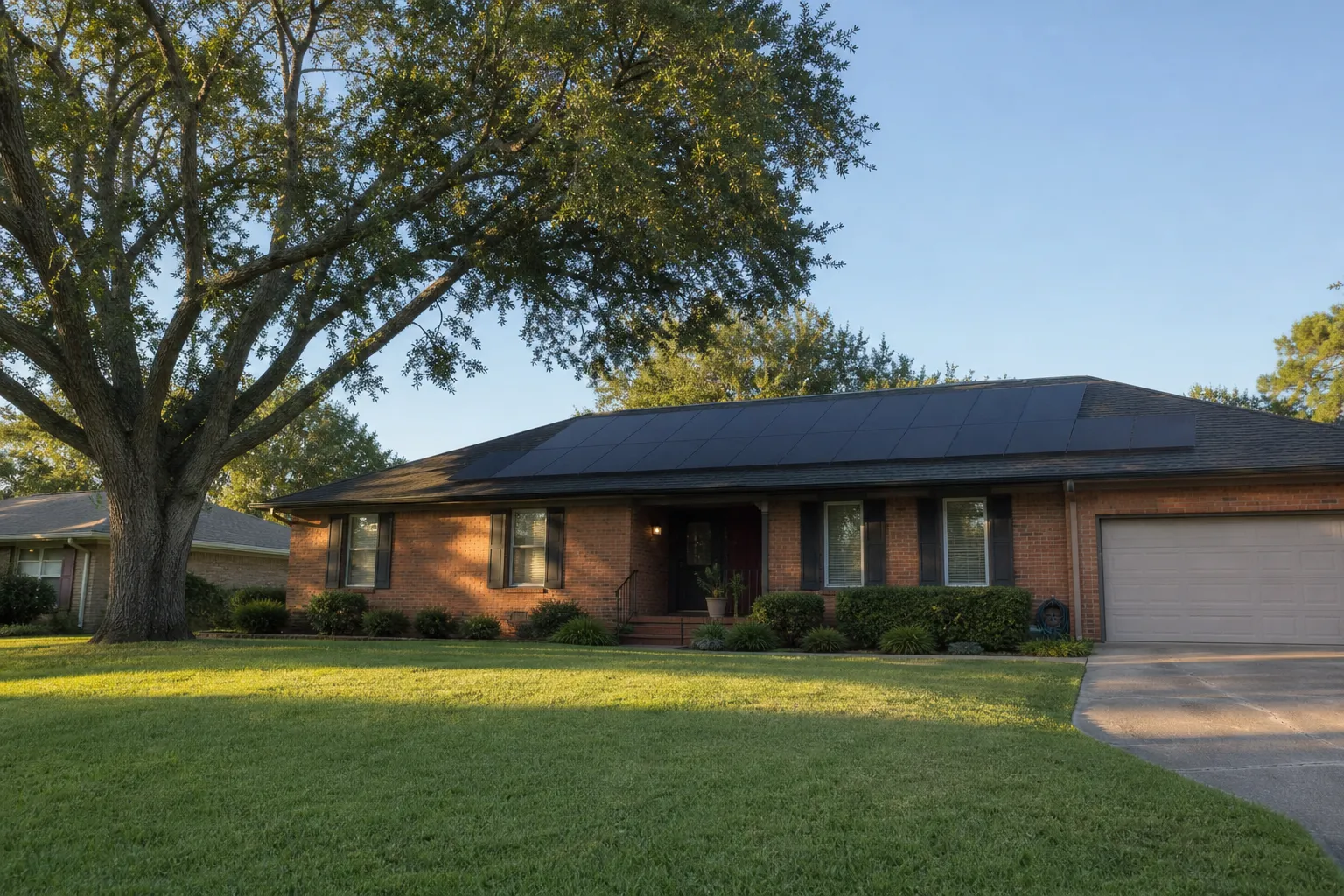
Real numbers
for GA.
Georgia at a glance

Home electricity price
About 16¢ per kWh

Credit for power you export
About 7.22¢ per kWh (Georgia Power)

Federal tax credit
Ended for 2026 purchases

State incentives
Few statewide
The straight answer
Solar likely pays if…
- You run AC or charge an EV while the sun is up
- Your summer bills regularly top $200
- Your EMC offers a solar rebate or retail-rate netting
- You’ll stay 12+ years
Solar may not pay if…
- You’re on Georgia Power and gone all day, so you’d export most output
- Your roof is shaded by pines or hardwoods
- Your HOA covenants ban or limit panels
- You’ll move within a few years
Show the Georgia math
Example home: 900 kWh a month at 16¢, 7.5 kW system making about 10,755 kWh a year in Atlanta
| Solar only | Solar + battery | |
|---|---|---|
| System cost ($3.00 a watt; battery about $12,000) | $22,500 | $34,500 |
| Power you use yourself | About 40% | About 85% |
| Bill savings a year | About $1,140 | About $1,540 |
| Years to pay back | About 20 years | About 22 years, plus backup power |
Exports earn about 7.2¢ per kWh; power you use yourself saves the full 16¢ (EIA average residential price, January to September 2026). Output from the PVGIS model (European Commission Joint Research Centre) for Atlanta. No federal credit for 2026 purchases. Your usage, roof, price and rate plan change every line.
Using your own power is what pays in GA.
By utility
| Utility | Typical home rate | Export credit |
|---|---|---|
| Georgia Power | Check your bill | About 7.22¢ per kWh (2026) |
| Electric membership corporations (EMCs) | Check your bill | Set by each EMC |
| City utilities (MEAG members) | Check your bill | Set by your city |
Checked November 2026. Georgia Power’s base rates are frozen through at least 2028, though fuel and storm charges can still change; a May 2026 settlement trimmed the average home bill about $4 a month. Many Georgians are served by electric membership corporations (EMCs) such as Jackson EMC and Cobb EMC, and each sets its own solar terms. Georgia incentives and net metering in detail →

Georgia questions
Does Georgia have net metering?
Not true net metering at Georgia Power. Its open option, RNR Instantaneous Netting, credits each kWh you send to the grid at the 2026 solar avoided-cost rate of 3.2188¢ plus a 4¢ adder, about 7.22¢. Residential systems are limited to 10 kW AC, and enrollment is first come, first served until it reaches 0.2 percent of Georgia Power’s peak demand. EMCs and city utilities set their own rules.
Are there Georgia solar rebates?
There’s no state rebate or state tax credit for home solar in 2026, and the federal 30 percent credit ended for systems installed after 2025. Georgia Power doesn’t offer a rooftop solar rebate. Some EMCs have offered one-time rebates with limited yearly funds, so ask your co-op what’s available.
Can my HOA block solar in Georgia?
It can. Georgia has no law stopping homeowners associations from banning or restricting solar panels, and a 2026 bill (HB 389) that would have done so didn’t become law. Read your covenants and get written approval before you sign an installation contract.
Is solar exempt from property tax in Georgia?
Georgia has no statewide property tax exemption for home solar, and no sales tax exemption for the equipment, so you pay sales tax on the system. How panels affect your home’s assessed value is up to your county, so ask your county tax assessor before you install and keep your invoice for any appeal.
Sources
- Georgia Power: Rooftop solar FAQs (RNR tariff)
- Georgia Power: PSC approves plan to freeze base rates through 2028
- Georgia PSC: May 2026 fuel and storm stipulation approval
- Georgia General Assembly: HB 389 (2025-2026)
- U.S. Energy Information Administration: Electric Power Monthly, Table 5.6.B
- European Commission Joint Research Centre: PVGIS
- How we do the math

Ready for real numbers on your Georgia roof?
No calls unless you ask. We never sell your details.
