
Does solar pay in Indiana?
Sometimes. Indiana ended net metering in 2022, so exports earn about 5¢ per kWh. Solar pays best where rates are high and you use most of the power at home.
Checked November 2026
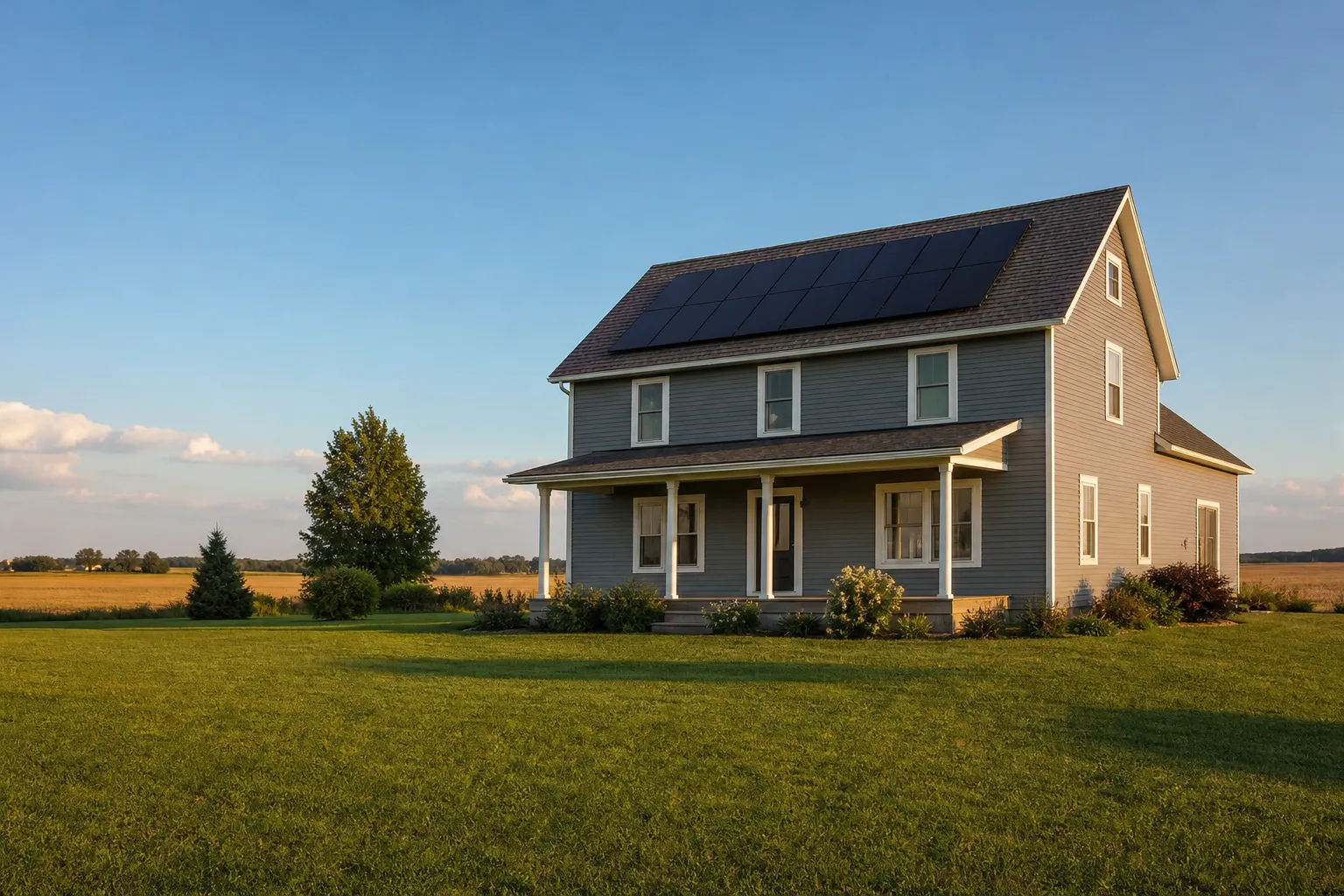
Real numbers
for IN.
Indiana at a glance

Home electricity price
About 17¢ per kWh

Credit for power you export
About 5.5¢ per kWh

Federal tax credit
Ended for 2026 purchases

State incentives
Few statewide
The straight answer
Solar likely pays if…
- You’re with NIPSCO or CenterPoint, where bills are Indiana’s highest
- You use most of your solar as it is made
- Your bill is over $150 a month
- You’ll stay in the home 15 years or more
Solar may not pay if…
- You’d export most of your power at about 5¢
- You’re on a city utility with low rates
- Your roof is shaded or faces north
- You may move within 10 years
Show the Indiana math
Example home: 900 kWh a month at 17¢, 8 kW system making about 10,984 kWh a year in Indianapolis
| Solar only | Solar + battery | |
|---|---|---|
| System cost ($3.00 a watt; battery about $12,000) | $24,000 | $36,000 |
| Power you use yourself | About 40% | About 85% |
| Bill savings a year | About $1,110 | About $1,680 |
| Years to pay back | About 22 years | About 21 years, plus backup power |
Exports earn about 5.5¢ per kWh; power you use yourself saves the full 17¢ (EIA average residential price, January to September 2026). Output from the PVGIS model (European Commission Joint Research Centre) for Indianapolis. No federal credit for 2026 purchases. Your usage, roof, price and rate plan change every line.
Using your own power is what pays in IN.
By utility
| Utility | Typical home rate | Export credit |
|---|---|---|
| Duke Energy Indiana | About 16¢ per kWh | About 5.5¢ per kWh (EDG) |
| AES Indiana | About 16¢ per kWh | About 5.4¢ per kWh (EDG) |
| NIPSCO | About 23¢ per kWh | About 5.0¢ per kWh (EDG) |
| CenterPoint Energy Indiana | About 22¢ per kWh | About 5.6¢ per kWh (EDG) |
Checked November 2026. Rates are July 2025 bills at 1,000 kWh from the Indiana Utility Regulatory Commission, divided per kWh and including fixed charges. EDG credits are 2026 figures and change each year. Indiana’s 72 city utilities and 42 co-ops set their own rules, so check yours. Indiana incentives and net metering in detail →

Indiana questions
Does Indiana have net metering?
Not for new customers. A 2017 law phased out net metering by July 1, 2022 and replaced it with excess distributed generation (EDG) credits. Any solar you don’t use the moment it is made is credited at a rate based on wholesale prices plus 25%. In 2026 that is about 5¢ to 5.5¢ per kWh at the five big utilities. Older systems may keep net metering for a period, so check your status.
Are there Indiana solar rebates?
There is no statewide solar rebate or state tax credit in Indiana. The federal 25D credit also ended for systems installed after December 31, 2025. Check your utility or city utility for any local programs, but plan your budget without one.
Can my HOA block solar in Indiana?
Sometimes. A 2022 Indiana law limits when an HOA can ban or remove solar. If your HOA restricts solar, you can seek approval from your neighbors through a petition process, and the HOA can then only refuse for reasons listed in the law, such as panels on common property or an install that voids warranties.
Is solar exempt from property tax in Indiana?
Not anymore. Indiana’s property tax deduction for solar power devices was eliminated by a 2025 law, retroactive to January 1, 2025. County auditors stopped applying it on 2025 pay 2026 tax bills, and you can no longer apply for it.
Sources
- Indiana Utility Regulatory Commission: 2025 residential bill survey
- Solar United Neighbors: Credit for electricity sent to the grid in Indiana
- Indiana DLGF: 2025 legislative update FAQ (expired deductions)
- AES Indiana: Rider 16 EDG tariff
- Indiana HB 1196 (2022): HOA restrictions on solar
- U.S. Energy Information Administration: Electric Power Monthly, Table 5.6.B
- European Commission Joint Research Centre: PVGIS
- How we do the math

Ready for real numbers on your Indiana roof?
No calls unless you ask. We never sell your details.
