
Does solar pay in Utah?
Sometimes. Utah has strong sun, but Rocky Mountain Power credits exports at only about 4.4¢ per kWh, so solar pays best when you use most of it at home.
Checked November 2026
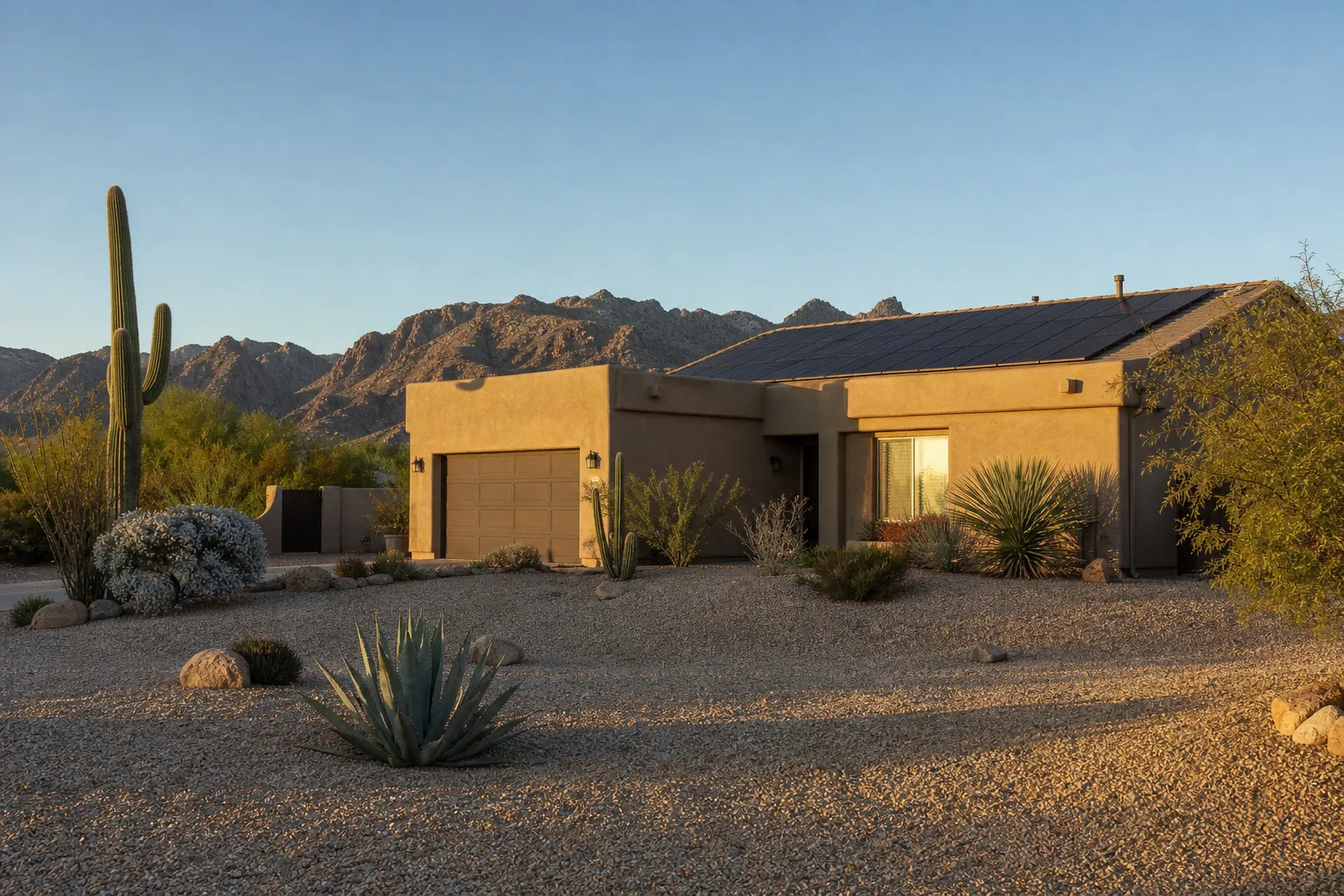
Real numbers
for UT.
Utah at a glance

Home electricity price
About 13¢ per kWh

Credit for power you export
About 4.4¢ per kWh

Federal tax credit
Ended for 2026 purchases

State tax credit
Ended for solar after 2023
The straight answer
Solar likely pays if…
- You use most of your solar power at home in daytime
- Your summer bills are high from air conditioning or an EV
- You’ll stay 15 years or more with a south-facing roof
- You add a battery to use exports instead of selling at 4.4¢
Solar may not pay if…
- You’d export most of your power at about 4.4¢ per kWh
- You’ll move within 10 years
- Your bill is already low, under about $100 a month
- Your roof is shaded or faces north
Show the Utah math
Example home: 900 kWh a month at 13¢, 6 kW system making about 10,644 kWh a year in Salt Lake City
| Solar only | Solar + battery | |
|---|---|---|
| System cost ($3.00 a watt; battery about $12,000) | $18,000 | $30,000 |
| Power you use yourself | About 40% | About 85% |
| Bill savings a year | About $840 | About $1,260 |
| Years to pay back | About 21 years | About 24 years, plus backup power |
Exports earn about 4.4¢ per kWh; power you use yourself saves the full 13¢ (EIA average residential price, January to September 2026). Output from the PVGIS model (European Commission Joint Research Centre) for Salt Lake City. No federal credit for 2026 purchases. Your usage, roof, price and rate plan change every line.
Using your own power is what pays in UT.
By utility
| Utility | Typical home rate | Export credit |
|---|---|---|
| Rocky Mountain Power | Check your bill | About 4.9¢ summer, 4.0¢ winter (Schedule 137, March 2026) |
| Municipal utilities (for example Provo, St. George, Murray) | Check your bill | Set by each city; ask your utility |
| Rural electric co-ops | Check your bill | Set by each co-op; ask your utility |
Checked November 2026. Rocky Mountain Power serves most Utah homes and its export credit is set by the Utah Public Service Commission and updated each year. City utilities and co-ops set their own solar rules, so call yours before you sign. Utah incentives and net metering in detail →

Utah questions
Does Utah have net metering?
Not one-for-one for new Rocky Mountain Power customers. Since the Schedule 137 program began, exported power earns an export credit rate that the Public Service Commission updates every year. As of March 1, 2026, it is about 4.9¢ per kWh in summer and 4.0¢ in winter. Solar you use at home still saves the full retail rate.
Are there Utah solar rebates?
Not for rooftop solar panels in 2026. Utah’s state renewable energy tax credit is no longer available for residential solar systems installed in 2024 or later, and the federal 25D credit ended for systems installed after December 31, 2025. Rocky Mountain Power runs a home battery program, so ask about current terms.
Can my HOA block solar in Utah?
Generally no. Utah Code 57-8a-701, amended in 2025, stops a homeowners association from prohibiting solar panels, though it can still set reasonable rules, such as limits on ground-mounted systems visible from the street. Read your covenants and get written approval before you install.
Is solar exempt from property tax in Utah?
We could not find a Utah property tax or sales tax exemption for home solar. Ask your county assessor how a new system will affect your home’s value, and ask your installer how sales tax is shown on the quote.
Sources
- Utah PSC: Rocky Mountain Power Schedule 137 update filing, January 26, 2026
- Utah PSC: Approval letter for Schedule 137 revisions, February 23, 2026
- Utah State Tax Commission: Renewable Energy Systems credit
- Utah Code 57-8a-701: solar energy systems in HOAs
- IRS: Residential Clean Energy Credit
- U.S. Energy Information Administration: Electric Power Monthly, Table 5.6.B
- European Commission Joint Research Centre: PVGIS
- How we do the math

Ready for real numbers on your Utah roof?
No calls unless you ask. We never sell your details.
